- Home
- Pricing
- About Us
- Partners
- Jobs
- Contact Us
- datasetAll in One Data Platform
- tuneFully Customizable
- widgetsAdaptable Widgets
- account_treeGuided Workflows
- psychologyAI Research Assistant
- cableInstrument & Software Integration
- securityEnterprise-Grade Security
- policyRegulatory Compliance
- webIntuitive User Interface
- support_agentExpert Support for Your Lab
- dnsData Centers
- qr_code_2Barcode/QR Code System
- articleElectronic Lab Notebook (ELN)
- inventory_2Inventory Management
- scienceLaboratory Information Management Systems (LIMS)
- scienceChemistry
- calculateFormulation Management
- yardAgricultural Research Manager (ARM)
- health_and_safetyQuality Management System (QMS)
- businessBusiness Development
- todayProject Management
- attach_moneyFinancial Management
- descriptionReference Management
- differenceOther Applications
- biotechBiotech and Pharmaceutical Companies
- scienceContract Research Organizations (CROs)
- stethoscopeClinical Products/Services for Physician Office
- agricultureAgricultural Research Companies
- cloudBuild Any SaaS Application in Minutes with AI
- Login
- Free signup
- Watch demo videos
- Referral Program
- Subscribe to our newsletter
- Documentation
- Blogs
- Resources
- Screenshots
- Downloads
- Terms of Service
- Privacy Policy
Chemical Synthesis
Connect compounds, reactions, stoichiometry, workflows, and batches
Overview
Labii Chemical Synthesis brings compound records, reaction documentation, chemical visualization, stoichiometry, workflows, and material tracking into one connected workspace. Scientists can plan and document synthesis work while preserving the relationships between starting materials, reactions, and the batches they produce.
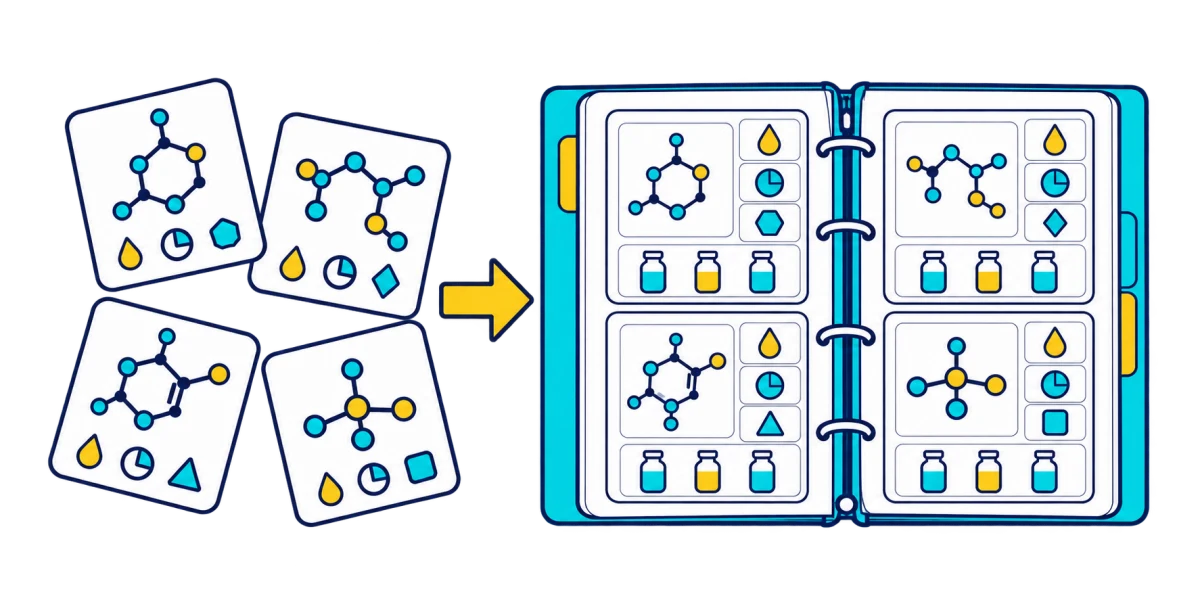
Build a Reliable Record for Every Compound
Keep each compound's identity, structure, properties, and related batches in a consistent record. Connected compound data gives scientists a dependable reference when planning reactions or reviewing prior work. The configurable data model can reflect the fields and relationships your organization needs.
Connect Each Reaction to the Compounds It Produces
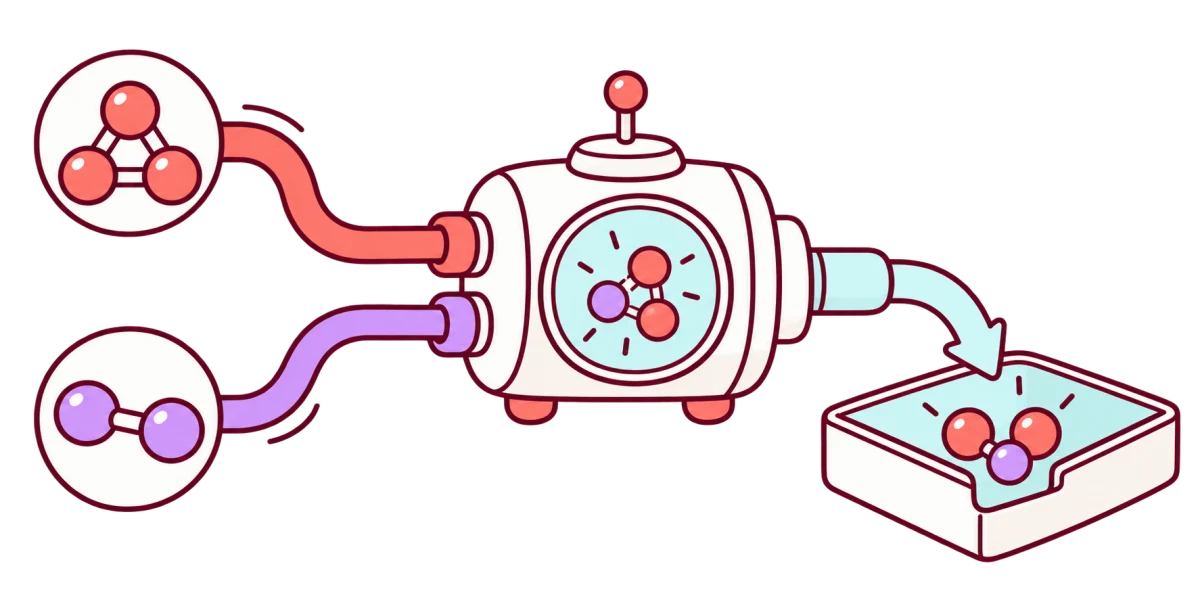
Document reactants, products, conditions, observations, and outcomes together in a reaction record. Link the reaction directly to its input compounds and generated products so the scientific context does not become separated across files. This connected history makes it easier to understand how a compound was produced.
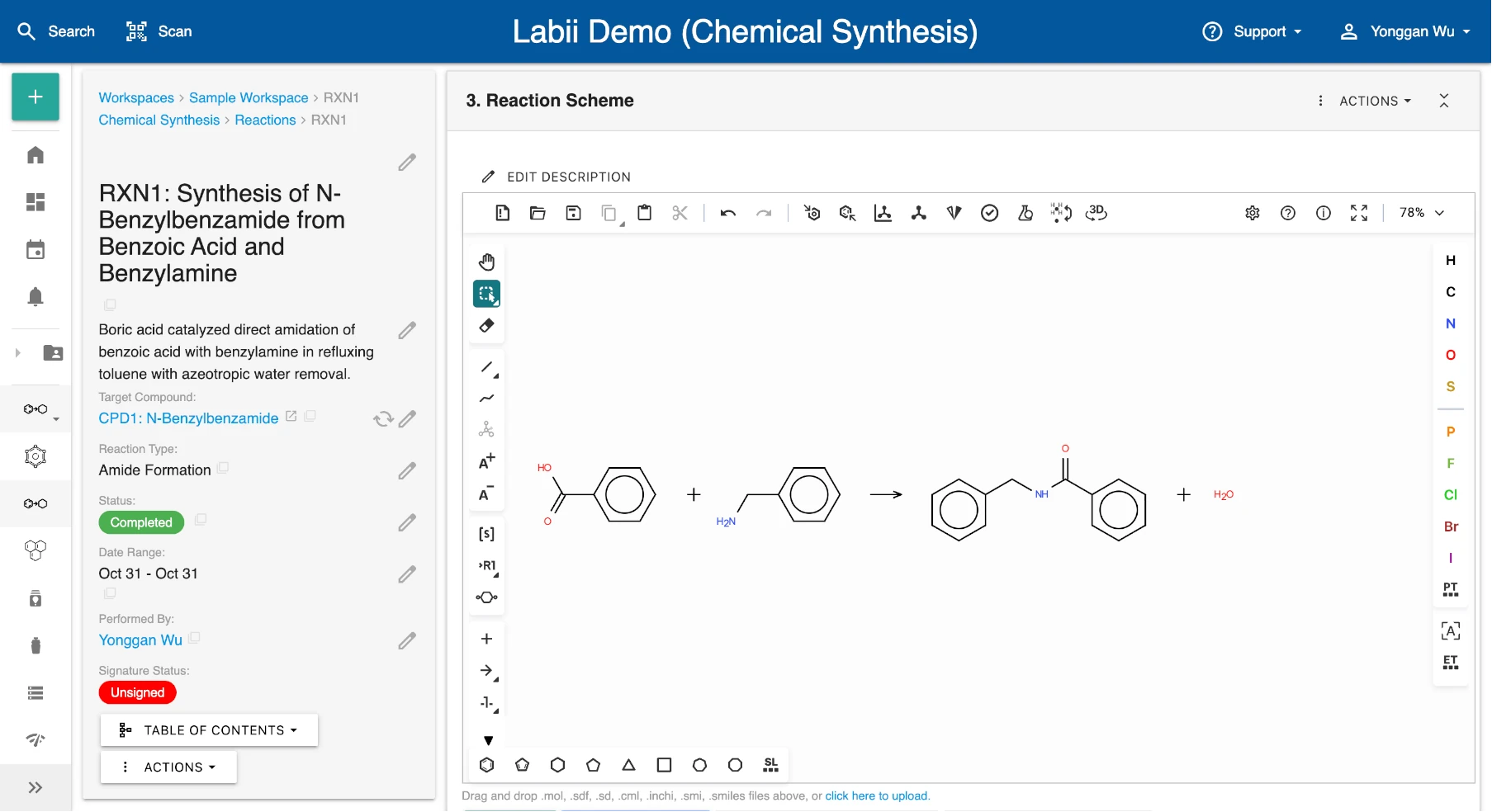
See Structures and Reactions Where Work Happens
Use visual chemical structure and reaction widgets within the synthesis record instead of separating drawings from experimental context. Scientists can review molecular structures and reaction schemes alongside the data they describe. Keeping visual chemistry close to the record reduces ambiguity during documentation and review.
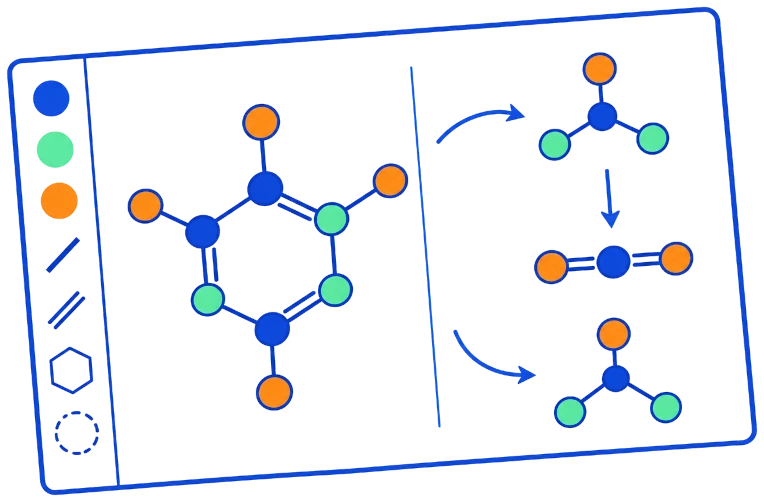
Balance Reactions and Plan Stoichiometry Automatically
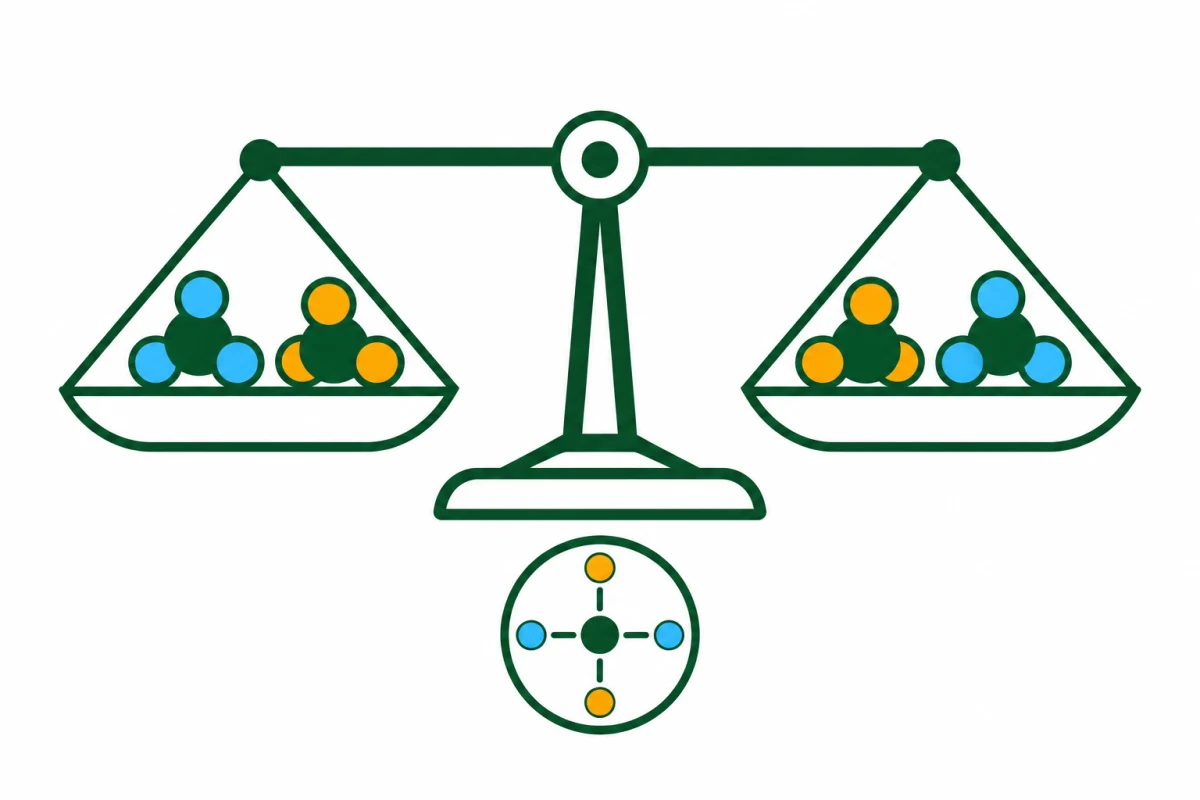
Use automatic reaction-equation balancing and stoichiometry to turn a reaction scheme into practical material requirements. Calculated relationships help scientists plan reagent quantities consistently and adjust the scale of a synthesis with less manual arithmetic. The reaction record keeps the plan beside the experimental work it supports.
Guide Every Synthesis Through a Clear Workflow
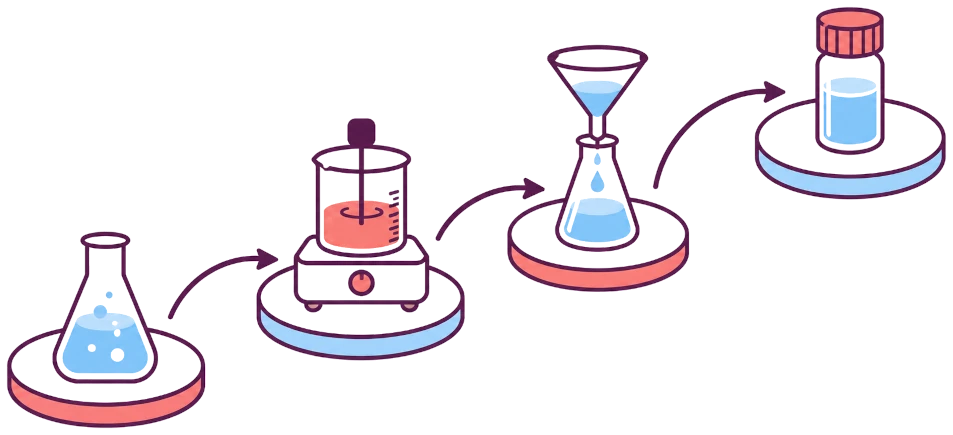
Turn the synthesis process into a defined sequence of steps that scientists can follow from planning through completion. Configurable workflows can reflect the checkpoints, forms, and decisions required by your organization. A shared process simplifies execution while keeping the work and its status visible.
Trace Every Input to Every Product Batch
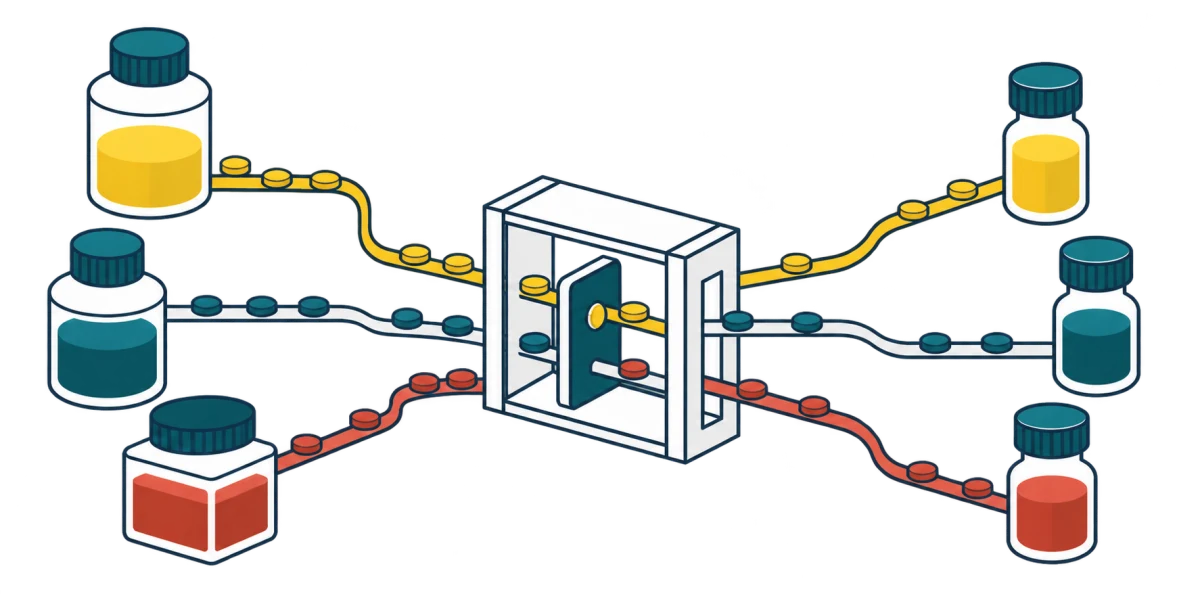
Track consumed materials as synthesis work is recorded and connect generated compound batches to the reaction that created them. Linked inventory, compound, reaction, and batch records preserve the path from input to output. Teams can review what was used, what was produced, and where each batch originated.
Commercial Chemical Synthesis Software Comparison
Chemical synthesis platforms differ in their documented chemistry focus, reaction handling, compound and batch context, workflow model, and broader platform scope. This comparison highlights Labii's distinguishing ability to configure tables, fields, relationships, dashboards, forms, and workflows around an organization's requirements.
| Software | Documented focus | Reaction and stoichiometry | Compound and batch context | Workflow model | Platform scope |
|---|---|---|---|---|---|
| Labii Chemical Synthesis | Configurable synthesis records within a modular scientific-data platform | Visual structure and reaction widgets, equation balancing, and stoichiometry | Linked compound, reaction, inventory-consumption, and generated-batch records | Organization-configured tables, fields, relationships, dashboards, forms, and workflows | Connected ELN, LIMS, inventory, projects, and laboratory operations |
| Signals Notebook | Cloud-native ELN for chemistry and multidisciplinary R&D | Native ChemDraw integration with automated stoichiometry calculations | Materials registration and inventory with experiment-linked consumption | Experiment templates, custom workflows, and APIs | Signals research suite with notebook, inventory, analytics, and integrations |
| CDD Vault | ELN connected to chemical and biological activity and registration data | Drawn or imported reactions with interactive, editable stoichiometry tables | Molecule and batch registration plus inventory-linked reagent usage | ELN templates, custom fields, and chemistry workflow features | Hosted research-data platform spanning ELN, registration, assays, and inventory |
| IDBS E-WorkBook Chemistry | Organic synthesis design and execution within E-WorkBook | Reaction drawing and dynamic forward or reverse stoichiometric calculations | Inventory-source reagent lookup and product-batch registration workflows | Configurable experiment items, columns, templates, and application interfaces | E-WorkBook ELN and LIMS environment with chemistry capabilities |
| Sapio Chemistry | Medicinal and synthetic chemistry workflows in Sapio LIMS and ELN | Reaction sketch, file upload, or lookup with automated stoichiometry | Compound registration and transfer of final product batches to inventory | Configurable synthesis templates and no-code cross-functional workflows | Unified LIMS and ELN platform for samples, inventory, requests, and assays |
Coverage note (October 2026): This comparison reflects capabilities described in official vendor materials. Product capabilities and packaging can change; confirm current requirements with each vendor.
Ready to Build a Better Way to Run Your Lab?
Turn scattered data and manual workflows into one configurable scientific platform. Start free to build your first Labii application, or request a personalized demo to see how your team can work faster, stay compliant, and scale without replacing the processes that already work.
Watch demo videosStart free trial
Refer a company to Labii and earn free months for each seat they sign.